

TLDR:
Spot trading volume on centralized exchanges hit $679B in April 2026, the lowest since October 2023.
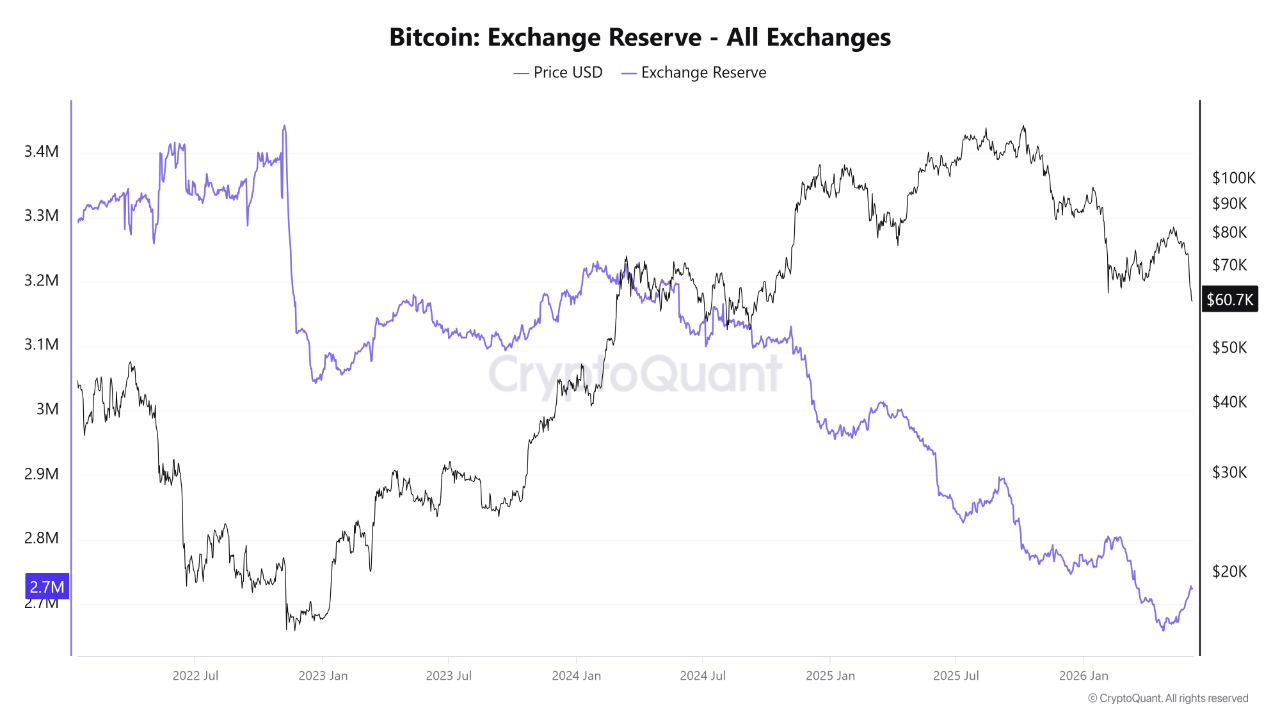
Bitcoin exchange reserves fell to roughly 2.7M BTC, reflecting holder conviction rather than sell pressure.
Gate, Kraken, and OKX continue processing large institutional transactions despite overall volume decline.
Trading of gold, silver, oil, and equities on crypto exchanges reached record highs in 2026.
The question of whether institutions have abandoned Bitcoin has grown louder in 2026. Prices have fallen sharply, ETF outflows continue, and many altcoins are down more than 70%.
On the surface, the market looks deserted. However, CryptoQuant’s latest on-chain data challenges that narrative directly.
The numbers point to a market where retail has stepped back, but institutional capital has quietly stayed put.
What the Volume Data Actually Reveals
Spot trading volume across centralized exchanges fell to $679 billion in April 2026. That figure marks the lowest level recorded since October 2023.
Compared to late-2025 highs, overall trading activity has dropped by roughly 67%. Those numbers look alarming at first read, but context changes the interpretation considerably.
The decline is being driven by weaker retail participation, not institutional withdrawal. Perpetual futures volume has also dropped as speculative leverage exits the system. This tells analysts that buyers have gone quiet — not that sellers are flooding the market with supply.
CryptoQuant’s trade size analysis adds another layer to this picture. Exchanges including Gate, Kraken, and OKX are still processing large institutional-sized transactions.
Source: Cryptoquant
Professional capital continues moving through these platforms at meaningful scale. That activity does not match the profile of an institution that has packed up and left.
So the volume drop is real, but its cause matters. Retail has retreated. Institutions, by contrast, appear to be holding their ground.
On-Chain Signals and the TradFi Convergence
Bitcoin exchange reserves have fallen to roughly 2.7 million BTC, sitting near multi-year lows. Investors are withdrawing coins from exchanges rather than positioning them for sale.
That behavior reflects long-term conviction, not preparation for an exit. When holders pull coins off exchanges, it typically means they intend to keep them, not sell them.
This drawdown in exchange reserves is one of the stronger on-chain signals in CryptoQuant’s report. It runs directly counter to the narrative that institutions are dumping holdings and walking away. The data shows accumulation behavior, even as prices remain under pressure.
Meanwhile, the integration of traditional finance into crypto infrastructure has reached record levels in 2026. Trading in gold, silver, oil, equities, and ETFs on crypto exchanges hit new highs this year.
Digital asset platforms are no longer operating as isolated venues. They are expanding into broader financial marketplaces that attract a different and wider class of participant.
That structural shift matters beyond the short term. Infrastructure does not build itself during periods of abandonment.
The fact that traditional asset trading on crypto platforms is hitting records suggests that serious capital continues flowing into the space, even if Bitcoin’s spot price tells a different story right now.
