
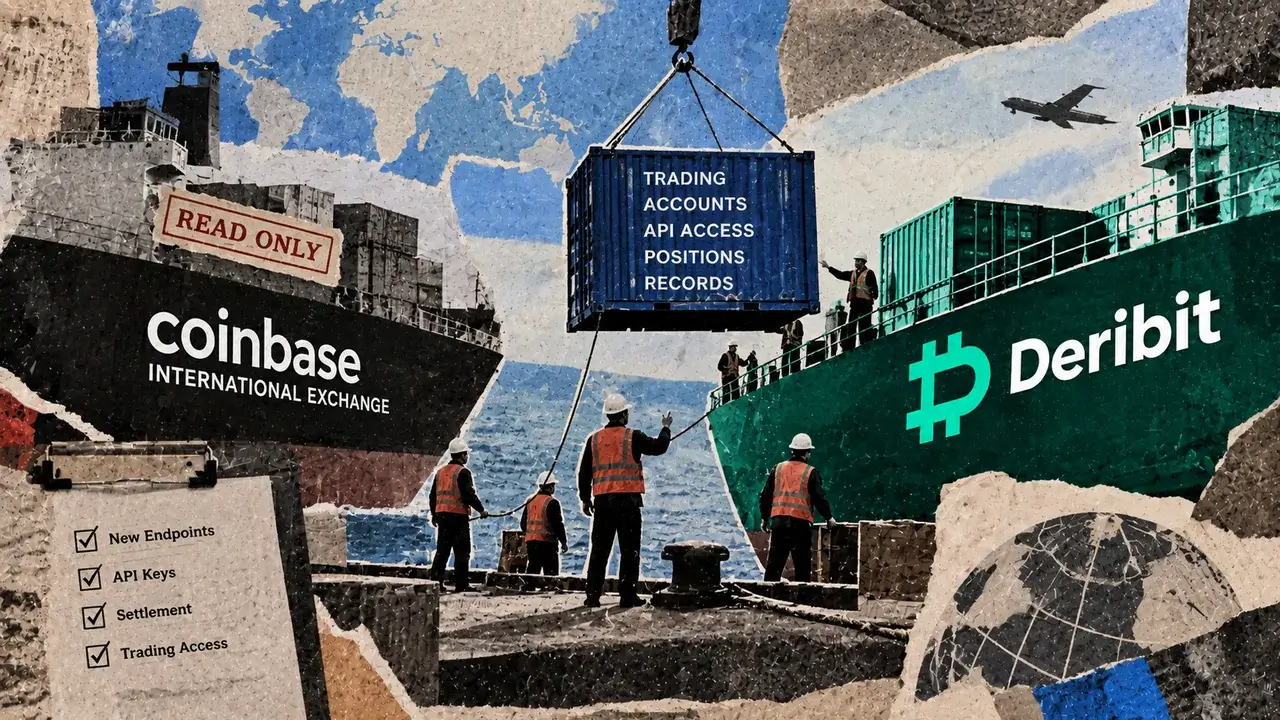
Coinbase completed the migration of Coinbase International Exchange to Deribit on Oct. 1, ending trading on its former international venue. The old exchange is now read-only, with its trading activity moved to Deribit.
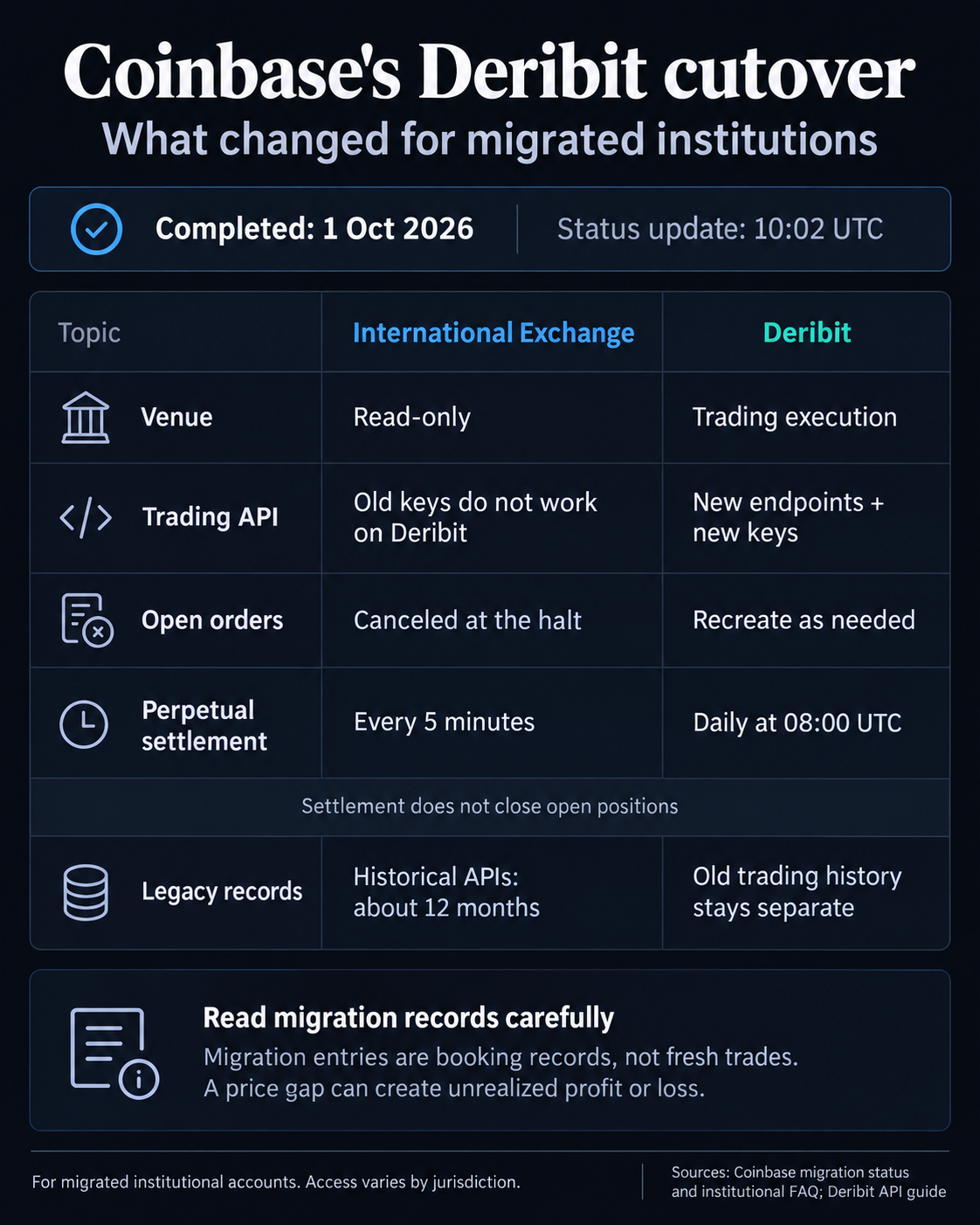
Coinbase’s migration status report marked maintenance complete at 10:02 UTC on Oct. 1, 2026. For affected institutional clients, the switch makes new trading connections, a different settlement cycle and separate historical records immediate operational issues.
Affected institutional accounts are limited to non-US institutions in selected jurisdictions. Coinbase says the consolidation pools derivatives liquidity previously split across the two venues. Available products and access still depend on account type and location.
Institutions using API or FIX connections need Deribit endpoints and newly created Deribit API keys. International Exchange keys will not work, and there is no parallel trading window on the former venue.
Deribit’s API migration guide also says API-key IP allowlists do not copy across. Instrument names and order attributes change, while open International Exchange orders were canceled at the halt rather than transferred. Clients wishing to reinstate canceled orders must recreate them on the new venue.
Execution moves to Deribit, but the institutional legal relationship has its own structure. Coinbase Bermuda Limited acts as these clients’ broker, custodian and primary counterparty, routing orders to Deribit, according to Coinbase’s institutional guidance.
Migrated perpetual positions now settle once a day at 08:00 UTC, replacing International Exchange’s five-minute cycle. Settlement credits profits or deducts losses from cash balances without closing the positions. Funding accrues continuously and cash-settles at the same daily time; its quoted eight-hour rate is a separate convention.
Trade histories also require care. Block-trade entries tagged “Migration” recreate positions at the International Exchange settlement price. They are booking artifacts, not new buying or selling. A difference between that price and Deribit’s mark at reopening can create immediate unrealized profit or loss.
Legacy International Exchange trading history does not appear on Deribit. Coinbase says historical trade and order APIs will remain accessible for approximately 12 months after migration, leaving institutions with separate records for activity before and after the switch.
For Coinbase app and website users, the account path differs: they keep their Coinbase account and familiar core workflows, although screens and market data may change. Customers using the Coinbase Advanced Trade API for derivatives still need the new Deribit-powered gateway.
The cutover also does not make every derivatives product immediately available everywhere. Coinbase continues to identify its CFTC-regulated Coinbase Derivatives futures separately, while US Prime options access follows a different timeline. Its retail FAQ plans in-app options for eligible users in selected non-US jurisdictions from late October, subject to availability.
The post Coinbase completes Deribit switch, ending International Exchange trading appeared first on Crypto Finders
