

Key Highlights
Bitcoin rallied more than 10% to reach $70,000, marking its highest level since early June following US Treasury bond market intervention
The Treasury Department’s buyback program pushed the 10-year yield down to 4.65% and the 30-year to 5.19% under Scott Bessent’s direction
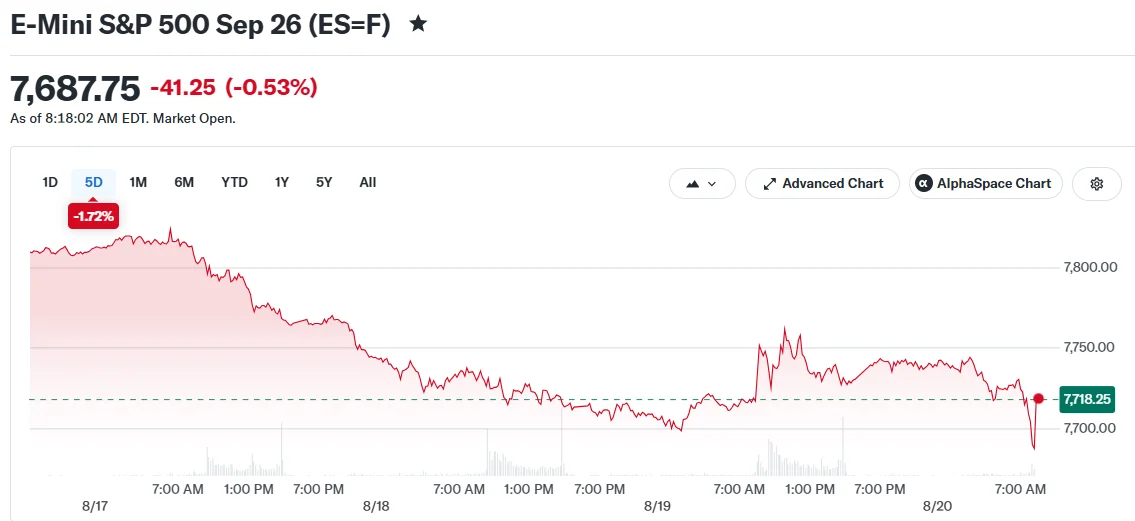
Equity futures showed mixed signals on Thursday morning, with Dow futures declining 0.1%, S&P 500 holding steady, and Nasdaq 100 advancing 0.1%
Walmart shares declined despite beating earnings estimates, weighed down by decelerating domestic sales expansion
America’s national debt surpassed the $40 trillion threshold while President Trump announced aggressive economic measures targeting Iran
This week brought an unexpected development from the US Treasury Department, which revealed plans to expand bond buyback operations significantly for longer-maturity securities. Treasury officials designed this strategy to suppress yields on the long end of the curve.
Following the announcement, the benchmark 10-year Treasury note’s yield declined to 4.65%. Meanwhile, the 30-year bond yield retreated to 5.19%. However, by Thursday’s opening, yields showed signs of reversal, with the 10-year climbing back to 4.68%.
Scott Bessent’s strategic market intervention brought stability to trading sessions on Wednesday. Each of the three primary US equity benchmarks finished Wednesday’s session with gains.
Thursday’s pre-market activity painted a different picture. Futures contracts for the Dow Jones Industrial Average retreated 0.1%. The S&P 500 futures remained unchanged. Nasdaq 100 contracts registered a modest 0.1% gain.
According to Deutsche Bank’s macro strategist Henry Allen, while the buyback expansion wasn’t substantial in absolute terms, it “offers a signal that officials are willing to support the long end.”
Crypto Markets Rally as Bitcoin Surpasses $70K
Digital assets delivered the most dramatic market response. Bitcoin surged over 10% and breached the $70,000 threshold for the first time in more than four months.
The Treasury Department’s action weakened the US dollar. Already trading near three-month lows, the greenback depreciated an additional 0.1% versus major currency peers Thursday morning. Historically, dollar weakness has correlated with Bitcoin price appreciation.
The bond market intervention also created potential complications for Federal Reserve policy. Fed Chairman Kevin Warsh had been relying on market forces to assist with monetary tightening. Bessent’s initiative could undermine that framework.
Retail Giant Reports Mixed Results While National Debt Climbs
Walmart delivered quarterly results Thursday that exceeded analyst projections. Despite the earnings beat, shares tumbled as the retailer’s domestic sales momentum decelerated.
Meanwhile, America’s total government debt crossed the $40 trillion milestone. This represents more than a doubling of the debt burden in under ten years.
President Trump also intensified his stance on Iran. In a Truth Social post Wednesday night, he announced plans for what he termed an “ECONOMIC D-DAY” targeting Iran. He characterized the initiative as “economic warfare and isolation on an unprecedented scale.”
The president’s frustration stemmed from stalled negotiations regarding the Strait of Hormuz reopening and broader Iran conflict resolution.
Wednesday’s Treasury bond rally appeared to lose momentum as Thursday trading began. Questions remain about whether the expanded buyback initiative can deliver sustained support to the fixed-income market.
Market participants continue monitoring yield movements as the government prepares for substantial debt issuance ahead. The dollar’s ongoing weakness and Bitcoin’s breakthrough above $70,000 represent the most definitive market responses thus far.
